
POP
Prosthetics & Orthotics for the Differently Abled Program
2
Government Patents Granted
14
Safety Factor Achieved
2.12 MPa
Reduced Stress Under 80kg Load
Overview
The Prosthetics & Orthotics for the Differently Abled Program (POP) is an innovation-led initiative focused on developing affordable, customized prosthetic and orthotic solutions in India. By integrating digital technologies with clinical expertise, POP aims to restore mobility, independence, and dignity for persons with limb loss.
2 patents have been granted by Government of India for this innovative technology. The details are as follows:
- A Process For Manufacturing A Prosthetic Limb Socket And The Socket Thereof (Patent No. – 556089)
- Method And System To Generate Personalized Data For Prosthetic Manufacturing (Patent No. – 504839)
Aim
Develop, Test and Validate. Customized 3d Printed Below Knee Prosthetics and orthotics that can be made At Affordable Cost in India.
Objectives
- To Make, Field Test and Validate an innovative, hi-tech, customized, 3D printed, below knee prosthesis (BKP) that meets the specifications and needs of professional prosthetists.
- Maximize the patient comfort so that a person can wear it for more than 8 hours/da, hold a regular job, and become a productive member of society.
- Develop other accessories like Liners, insoles etc. that are necessary to make our products acceptable to patients and prosthetists around the world.
- Develop a Rehabilitation Center at MediCiti/ SHARE INDIA to advice, train and enable patients to handle daily jobs to achieve their highest potential.
Key Technologies Used
3D printing, Photogrammetry, Remote Digital Patient Data Collection Cad/Cam, Image processing,
Novelty:
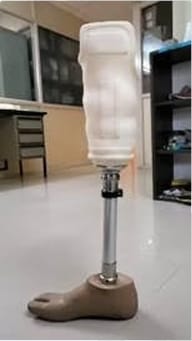
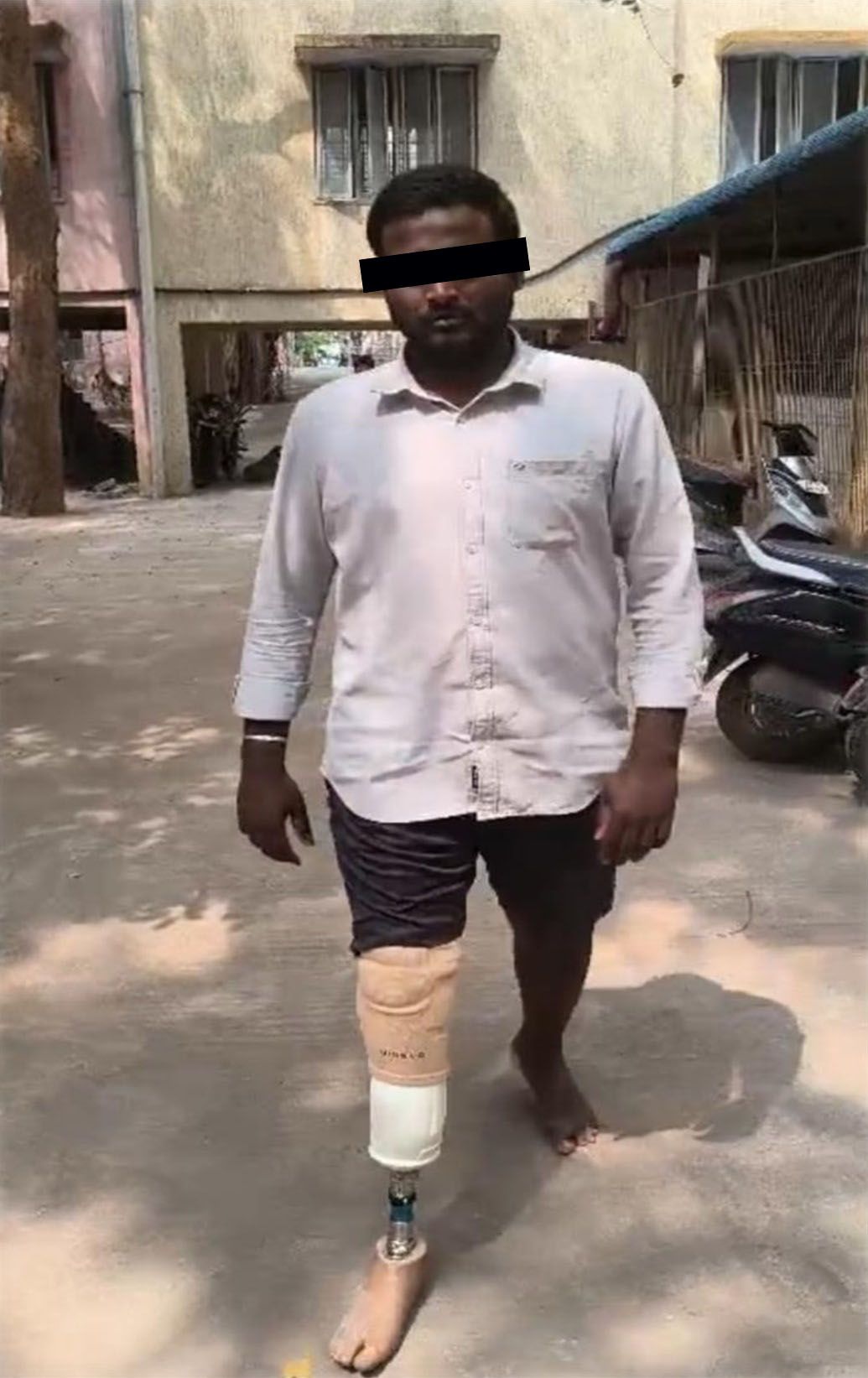
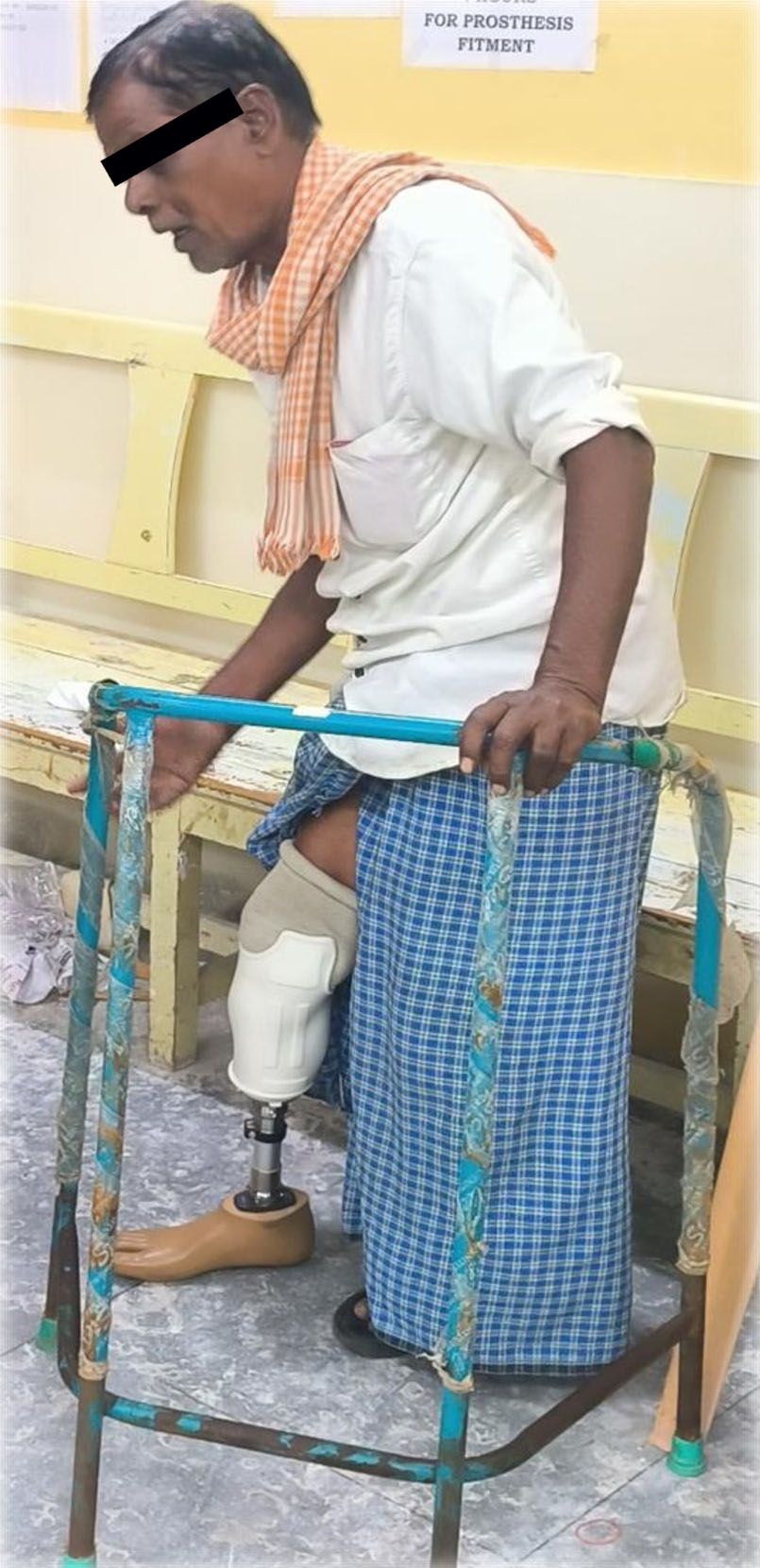
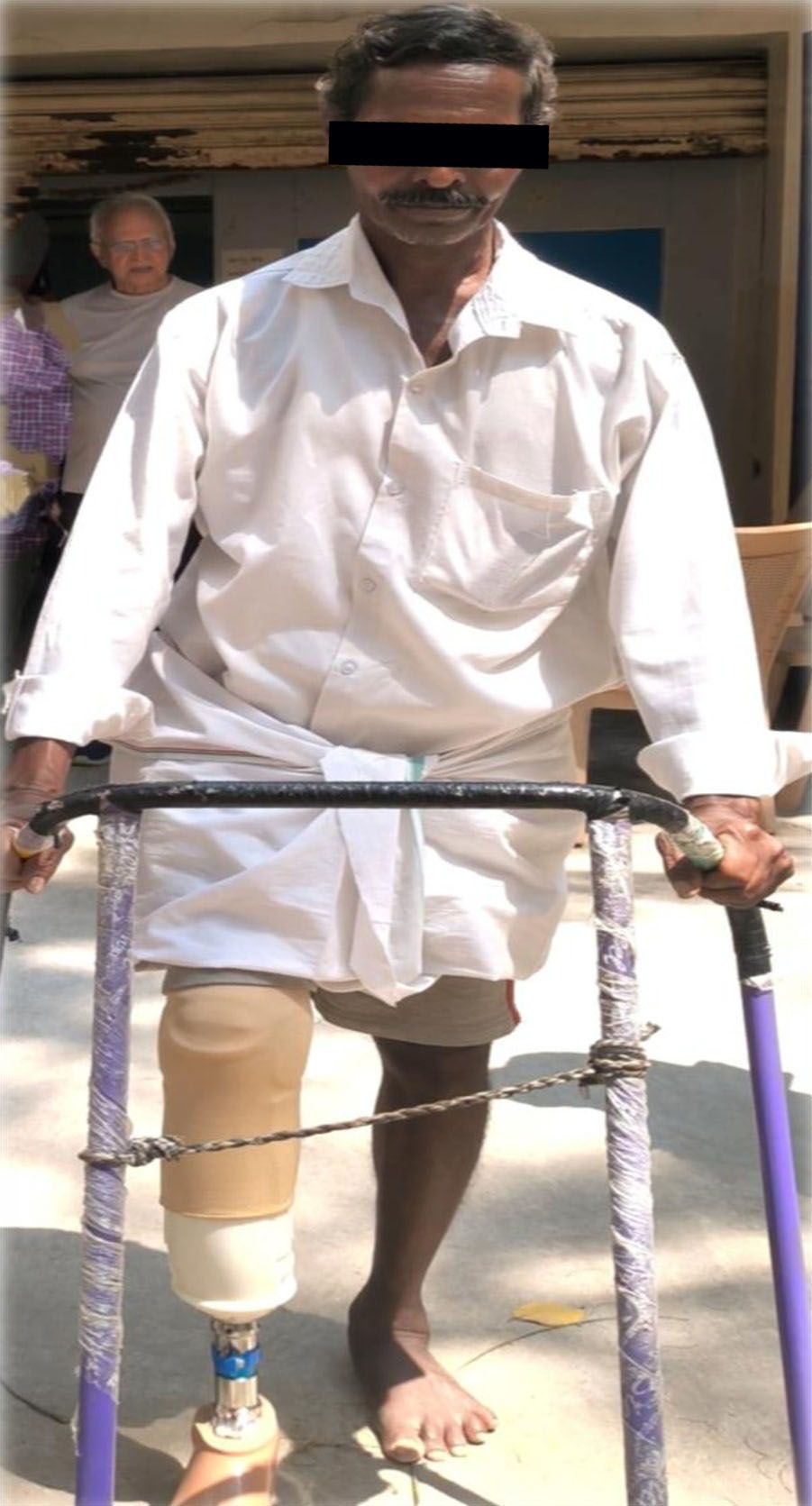
Our prosthetic sockets are custom designed to exactly fit the shape of stump of each patient. This results in a comfortable fit “Sukhfit”. Patients can comfortably wear it for over 8hours/day, to hold a full-time job and become productive member of society.
The digital data is collected remotely with our specially designed work bench (Indian IP in process). Photogrammetry software is used to produce a 3D model of the stump and STL file
The socket is 3D printed with special thermoplastic materials (single or composite). The socket is designed with specific ridges and reinforcements to ensure adequate strength based on ANSYS analysis. Field tests on patients are ongoing.
Our process now eliminates use of toxic materials like Plaster of Paris and laminating resins routinely used by prosthetists around the world.
Our process also minimizes human errors and need for multiple visits by patients to check for good fit.
The Share India “Sukhfit” socket is the first of its kind. It is environmentally safe, comfortable, durable, and affordable for the patient. The local expert prosthetist’s in Hyderabad are excited about our product and ready to help us validate and market it.
Work Completed to Date
- Made New Portable Work benches for Digital data collection from patients.
- Modified the socket design (with Ribs, Ridges and other reinforcements so that the safety factor has increased from 10 to 14. Also the socket shape is made appealing to local Prosthetists.
- New socket designs are tested using FINITE ELEMENT ANALYSIS and ANSYS programs. The Static Analysis Results for 80 kg person show Max. Stress reduction from 3.5 to 2.12 MPa and Safety factor Increase from 10 to 14.
- Socket with the latest developed features are given to 4 patients for testing them.
Current Status of the Project
- A proof of concept for making 3D printed prosthetic socket was demonstrated in 2018 with BIRAC grant funds in collaboration with BITS Pilani Hyderabad. This was based on ISOS (inner surface -outer surface technology). The toxic resin cladding required for the outer surface was not acceptable to the prosthetists. So we embarked on developing an enhanced 3D printing method that does not require the outer resin layer and produced the novel “Sukhfit” Model.
- This new Sukhfit is being liked by the prosthetists and patients alike. It and is currently in the testing phase.
- A Silicone rubber liner can greatly increase the comfort level of Sukhfit. Silicone liners are currently imported in India at a high unaffordable cost from Germany or USA. Therefore, we have decided to make Indian made Reinforced Silicone Liners.
In addition to liners, Silicone rubber can be very useful material to make insoles for people with foot pain during walking and especially for patients with diabetes. Hence, we have developed and perfected methods to make customized insoles.
To make 100 ‘SUKHFIT’ sockets to be tested and given free.
Future Developments
Liners
The new improved liner is under development, our design proposes to replace the foreign made and expensive silicone socks (>INR 20k). Liners are used to improve safety and comfort by adding a cushioning layer between the residual limb and the prosthetic socket. Liners also absorb some of the sudden shocks or loads applied on prosthetic limb while walking thus increasing the safety of the socket.
Insoles
Insoles are used to provide comfort while walking and reduce foot pain. We made Insole from MCR and reinforced silicone rubbers with and without Arch support. Trails of testing them on patients are under progress.
3d Printed Prosthetic Hand
We also made a 3D Printed Prosthetic hand by 3D Printing technology. This Prosthetic hand serves as an artificial limb for the amputees. These devices are appealing because 3d printing allows for fast, and accessible manufacture, and because the CAD-modeled designs are easily scalable and can be readily customized patient-to-patient for aesthetics or functionality. This model works by with and without using electronics.